
Setup Guide
How to Fish the Magic Bait Ball
The Magic Bait Ball introduces a completely new way to fish downriggers — centered around short leads. This page covers the basic setup and then dives deep into why short lead fishing is a game-changer.
Basic Setup
Clip your cannonball directly below the Magic Bait Ball for standard salmon and walleye fishing.
For lake trout bottom bouncing, use the optional 3-foot Laker Leader so the Magic Bait Ball rides safely 2–3 feet above the cannonball.
Critical: Your downrigger release must sit above the highest spinner blade. Use a short rip cord, our Nark Release, or a stackable release (Chamberlain, Scotty, etc.) to keep your line clear of the blades.
For Walleye Anglers Using Diving Lures
The ideal placement is to have your diving lure running centered directly behind the Magic Bait Ball. Because diving lures dive at different rates, the exact height of your release will depend on the lure's dive curve and your leader length.
Chamberlain stackable releases work especially well with wire downrigger cable because you can position them at any height above the Magic Bait Ball and dial in the tension of the release. Scotty releases are also an excellent option for fine-tuning the release height.
Watch: Setting up the Magic Bait Ball
Run Short Leads (5–15 feet)
The Game Changer
This is where the Magic Bait Ball truly transforms how you fish.
Instead of running long leads to keep lures away from the cannonball, the Magic Bait Ball lets you run your lures tight behind it (5–15 feet). Because the lure is so close to the bait ball, it reacts instantly to every movement of the cannonball.
This shift from long-lead, passive trolling to short-lead, active fishing is one of the biggest advantages of the Magic Bait Ball.
Key Advantages of Short Lead Fishingwith the Magic Bait Ball
Better Hooksets
With far less slack in the line after a release, you get much stronger, more solid hooksets when a fish strikes.
Faster Resets
When a fish strikes on your downrigger rod, you don't have to wait until it's landed to get back in the water. While one angler fights the fish, another can quickly raise the cannonball, reset the downrigger with a new lure on a short lead, and get it back down immediately — without tangling or interfering with the fish being fought.
This lets you stay in the productive zone and maximize every opportunity.
Fewer Tangles
Short leads dramatically reduce tangles in almost every situation.
You can set or reset a downrigger while turning with far less risk of crossing your dipsy divers or other lines. You can also leave a shallow running short-lead downrigger actively fishing while deploying or resetting additional rods. Even when deploying dipsy divers during turns, the chance of tangling drops significantly.
The result? Faster resets, more lines in the water, and more opportunities for strikes.
Superior Maneuverability
Short leads give you significantly better control over your boat — especially in heavy traffic or when you want to quickly circle back through a productive area after a hook-up.
You're far less likely to get pinned in by other boats. It's so frustrating to have boats on both sides matching your speed, trapping you and preventing you from trolling where you want. With short leads, you can make tighter, more aggressive turns and escape that situation much more easily.
Create Action from Currents and Waves
The cannonball naturally sways side-to-side with underwater currents and rises and falls with the waves. With short leads, your lures follow that same lifelike, three-dimensional movement.
To a following fish, your lure looks exactly like a straggling baitfish desperately trying to catch up to the school — darting, pulsing, and flashing erratically as it fights to rejoin the group. This is often the trigger that turns a follower into a committed strike.
Active Fishing Instead of Passive
Traditional downrigger fishing is mostly passive — you set your lines and hope something happens.
With short leads and the Magic Bait Ball, you shift from passive waiting to actively triggering strikes. By periodically jigging your cannonball — raising or lowering it 8–10 feet — you can suddenly change the lure's depth and action as it trails the Magic Bait Ball, often turning a following fish into a solid hook-up.
Captains using Livescope, Panoptix, or similar live viewing sonar gain an even bigger advantage: they can watch fish approach the Magic Bait Ball in real time and jig at the perfect moment.
Pro Tips for Maximum Success
Get the most out of your Magic Bait Ball with these field-tested techniques.
Master Ultra-Short Leads
With leads under 7–8 feet, keep your lure in the boat while you clip it to the release. Then lower the Magic Bait Ball and cannonball first. Once it is in the water, toss the lure behind it. This prevents dangling lures from tangling in the arms and blades of the Magic Bait Ball, especially on windy days.
Keep Your Line Snug When Setting the Release
While looping your line and clipping it into the release, keep the line taut between the downrigger rod tip and your hand. A slack line is more likely to tangle with the Magic Bait Ball's arms or blades. Maintaining steady tension prevents tangles and makes deployment much smoother.
Vary the Magic Bait Ball's Position in Your Spread
Many anglers run an 11-inch paddle and fly on their deepest downrigger to pull fish into the spread — that's an excellent place for the Magic Bait Ball. Try another proven tactic: raise the Magic Bait Ball higher in your spread and run dipsy divers below it. Fish rising from deeper water are drawn to the Magic Bait Ball; those that don't strike often peel off and dive back down — right into your waiting dipsy divers. This simple depth switch frequently produces extra strikes.
Keep a Backup Downrigger Rod Ready
Always have a second downrigger rod fully rigged and ready for deployment. When a fish strikes, quickly raise the cannonball and have a crew member reset it while you fight the fish. Short leads make resets fast and tangle-free.
Stack a Second Line Above the Magic Bait Ball
One of the best moves you can make when fish are aggressively feeding is to stack a second lure 6–10 feet above the Magic Bait Ball. This creates a high-density lure zone right in the heart of the attraction area. It's an extremely effective tactic when the rigger bite is hot, letting you put multiple lures close to the baitfish school illusion where aggressive feeding is most active. You can do this with a fixed slider or a stacked second downrigger pole.
⚠Caution: If mature salmon are in the area, we strongly recommend using a stacked second pole instead of a fixed slider. Anglers have landed multiple salmon on a single line with this technique, and fighting two mature fish on one rod can be chaotic and risky.
Adjust Lead Length Based on Fish Mood
If fish seem finicky — dipsy divers and downriggers are quiet while long lines are producing — try lengthening your lead behind the Magic Bait Ball to 15 feet or more. The Bait Ball will still draw them in, but the extra distance can trigger strikes from fish that aren't aggressively feeding.
However, if you notice sonar marks of fish inspecting your downrigger but not biting, try shortening your lead length to 4 or 5 feet. Some days they seem to zero in on the Magic Bait Ball so much that you have to pull your lure in tight to get bit.
Switch It Up When Spoons Aren't Working
If spoons aren't producing, try a large paddle flasher or flasher fly behind the Magic Bait Ball. These presentations often excel in the same strike zone.
Jig the Rigger to Trigger Strikes
Periodically raise or lower your downrigger 8–10 feet. This sudden change in depth and action often turns followers into strikers. Captains with Livescope, Panoptix, MEGA Live or other live viewing sonars can time the jig perfectly by watching fish approach in real time. We recommend you always jig the rigger before pulling it up.
Add a Scent Trail with Magic Scent Sponges
Remove the LED and replace it with a Magic Scent Sponge soaked in herring oil (or your favorite bait oil). Secure it with toothpicks in the LED pocket. These sponges absorb oil extremely well and release it slowly, creating a powerful scent trail that lasts 6–8 hours before recharging. Available now in our shop.
Don't Pop the Rod Free When Retrieving
When bringing the downrigger up, leave your line in the release.
Here's why:
- Easy bait changes – With a short lead, you can quickly swap lures without ever taking the line out of the release.
- Avoid accidental short leads – If the line isn't fully secured, the pressure of the drop can cause it to slip through the release and pull the lure tight against it. What started as an 8-foot lead can quietly become a 0-foot lead — and you'll never know if you pop the rod free before retrieving.
- You can still get bit on the way up – Leaving the line in the release keeps your lure trailing the Magic Bait Ball during the retrieve. We've caught fish while the cannonball was coming up.
Bare Metal Version
Blade Recommendations for the Bare Metal Magic Bait Ball
The Bare Metal version gives you complete freedom to customize your rig with any blades you prefer. To get the maximum effectiveness from the Magic Bait Ball, we strongly recommend keeping your blade selection cohesive and balanced — even if you mix colors or sizes.
Why Uniformity Matters
In nature, predators struggle to single out an individual when everything in a group looks and moves similarly. A well-known example comes from African wildlife studies: when researchers painted marks on individual zebras to make them stand out from the herd, lions quickly targeted those specific animals. The standout zebra became easy to isolate and attack.
The same principle applies underwater. With 18 spinning blades creating flash, thump, and vibration, you want fish to see a blurred, cohesive school of baitfish. You do not want them to isolate an individual blade to hunt. It's perfectly fine to mix colors (such as blues and greens) or even different sizes — as long as you use plenty of each type. What you want to avoid is one or two blades that are drastically different from the rest. A single odd-colored or odd-sized blade can stand out and draw unwanted attention to the Magic Bait Ball itself.
The only thing that should stand out is your trailing lure — the one that looks like a straggler separated from the group.
Our Recommendation
- Use the same style, color groups, and finish across most or all 18 blades.
- If mixing colors or sizes, use generous quantities of each so no single blade stands out.
- Create a consistent overall "school" effect with complementing flash and vibration signatures.
- Let the only true standout be your trailing lure — that's the one you want fish to target and attack.
Important Note on Balance and Performance
For the Magic Bait Ball to run straight, track properly, and deliver the lifelike movement fish expect, side-to-side balance is critical. Consider blade size, cup depth, and water resistance when placing blades on the six arms. Avoid loading heavy, high-resistance blades on one side and light blades on the other.
Also be cautious about placing high water-resistance blades on the outermost positions. Excessive drag in those spots can cause the arms to bend backward, shrinking the overall diameter of the bait ball and reducing its effectiveness. Finally, always consider your trolling speed — some blades spin reliably at slow speeds while others perform better at faster speeds.
By building a uniform, well-balanced, hard-to-separate bait ball, you maximize the illusion and direct the fish's focus exactly where you want it: straight to your lure.
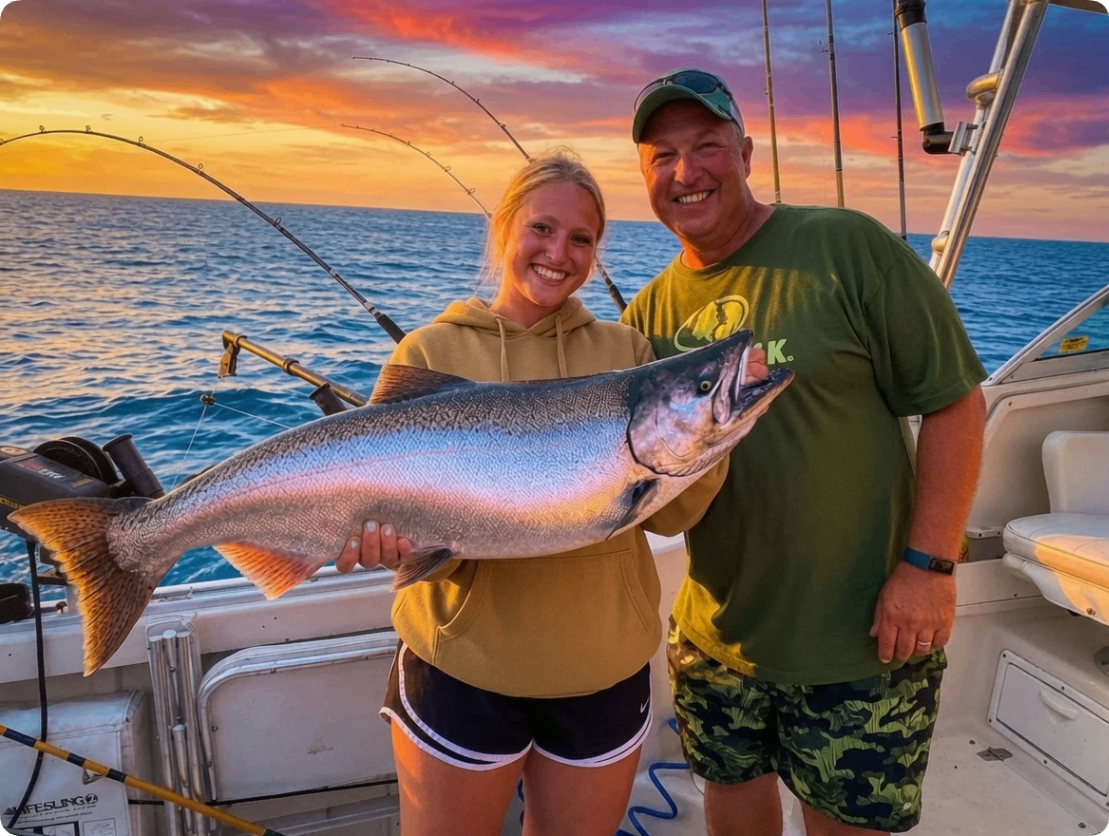
Bottom line: Short leads + the Magic Bait Ball turns downrigger fishing from a "hope and wait" game into a highly responsive, high-success tactic that puts you in control of triggering bites.
This is more than a new product — it's a new way to fish downriggers.